
Insight
The "Smell of Marijuana" Isn't a Blank Check: A Tennessee Search & Seizure Victory
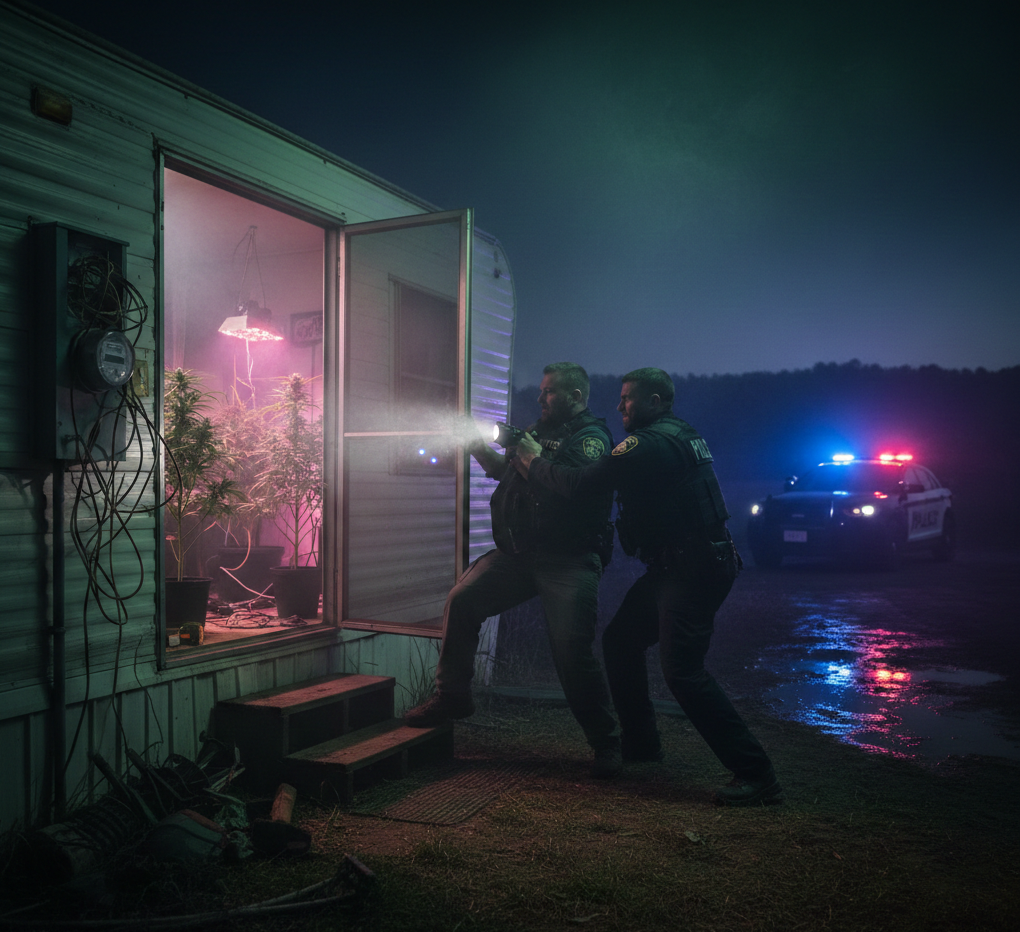
The Story: A Single-Wide Trailer and a "Harvest" Tip
In 2013, a Tennessee Drug Task Force targeted two defendants operating a small marijuana grow-op inside their single-wide trailer. The agents acted on an anonymous tip claiming a "harvest" was happening that very night.
Upon arriving at the scene, the agents noted several common indicators of marijuana cultivation. First, they reported a "very strong odor" of raw marijuana emanating from the residence. Furthermore, investigators discovered the home's electricity bill exceeded $300 per month—nearly four times the $70 average for a trailer of that size. High electrical variance often suggests the use of high-intensity grow lamps.
The "Knock & Talk" Investigation
Armed with these suspicions, the agents attempted a "knock and talk." This investigative tactic occurs when officers approach a suspect's home and simply ask for permission to enter. Surprisingly, many suspects voluntarily allow police inside, even when illegal drugs or paraphernalia sit in plain view.
In this specific case, however, the defendant stayed firm. He exercised his constitutional rights and explicitly told the police to return only when they possessed a valid search warrant.
The Illegal Entry: When Agents Ignore the Law
Instead of securing a warrant, the agents grabbed the defendant and forced their way into the dwelling. Once inside, they confirmed their suspicions by finding multiple marijuana plants and cultivation equipment. Only after this illegal entry did the agents obtain a warrant to officially seize the evidence.
The Verdict: Evidence Suppressed
During the trial, the court scrutinized the agents' conduct. Consequently, the judge ruled that the officers had illegally entered the home, thereby violating the defendant’s Fourth Amendment rights. Because the initial entry was unconstitutional, the court suppressed all physical marijuana evidence.
Ultimately, this case proves that even with "probable cause," the police must respect the boundary of the home. Without a warrant or a true emergency, the evidence they find is often legally invisible.
Read More:
→ BLOG: What Real Estate Agents can't talk about!
→ BLOG: Contingency: What does it mean in Real Estate?
→ BLOG: You received your Closing Disclosure, Now What?
→ BLOG: Tennessee Real Estate Disclosures